our work
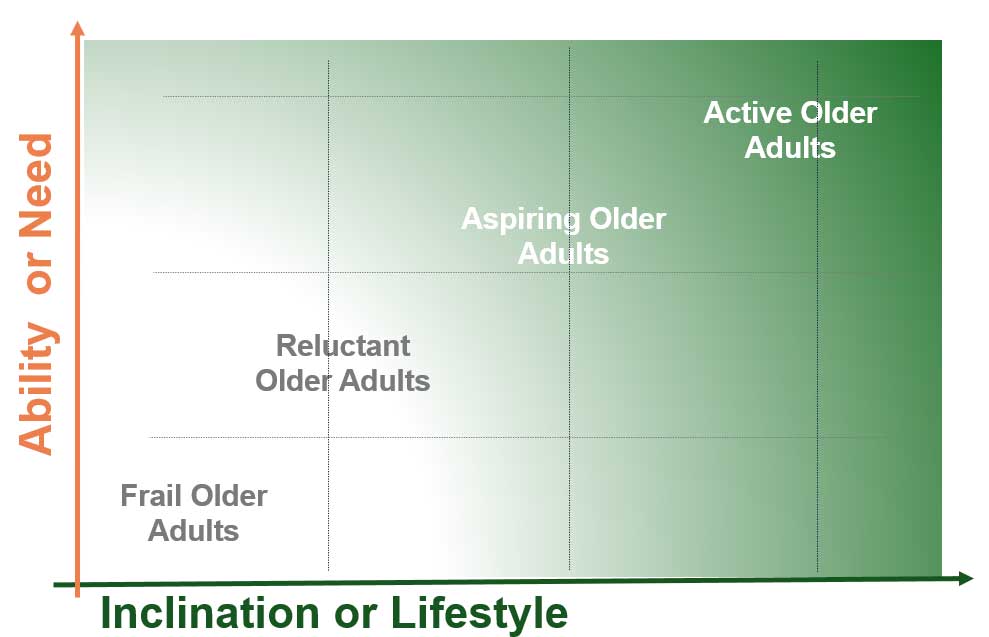
The Older adult typology of physical activity (OAT-PA) recognizes four levels of physical activity for older adults along a continuum based on ability or need and inclination or lifestyle. The OAT-PA and its accompanying implementation tool can promote intentional work towards older adults gaining the ability and inclination for increased or sustained physical activity.
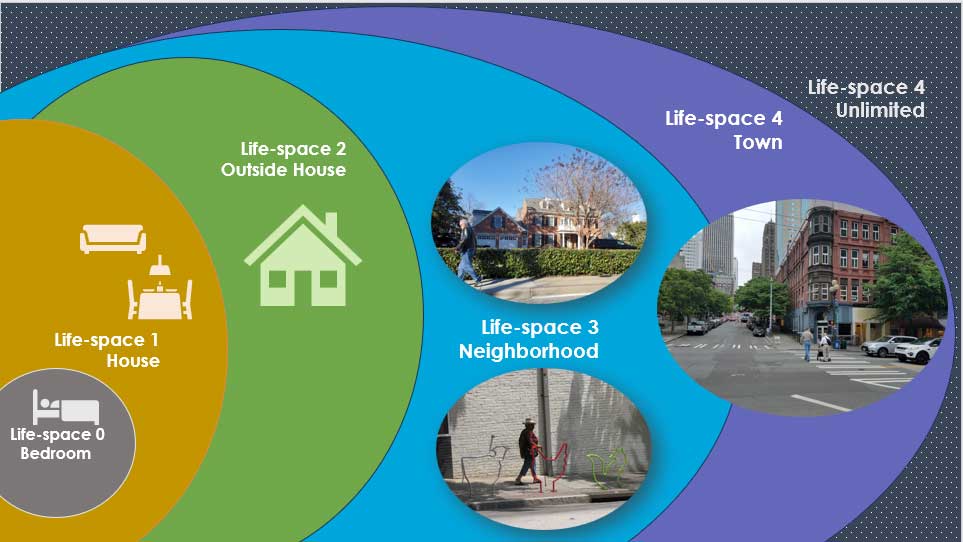
The Life-Space Mobility Framework consists of six potential spaces for the range of a person’s daily activities beginning with their bedroom and ending with the broader community. While the three spaces in the home are outside the purview of active mobility infrastructure work, the three remaining are: Neighborhood, Town, Beyond. This framework is typically used to assess older adults with cognitive or physical limitations, without assessing available active mobility infrastructure. How does missing, poorly or well-designed active mobility infrastructure on an older adult’s life-space range?
Person-Environment Fit Theory helps determine if something is right for a person – friendships, jobs, a house, or a sidewalk to take a walk. A Person-Environment Fit approach tells us that people avoid things that do not fit. For older adults, a built environment that doesn’t fit can discourage walking, cycling, using public transit, etc., resulting in reduced mobility, socializing, and overall well-being.